Ritual / Calm8 min
Listening to the Room
Notice ordinary sounds without needing special equipment.
Explore ritual SwthastuTHE ART OF LIVING WELLSwthastuTHE ART OF LIVING WELL
Offer a brief sensory pause at a comfortable, agreed volume.
A small practice for calm. Read the care guidance, choose a comfortable setting and make it your own.
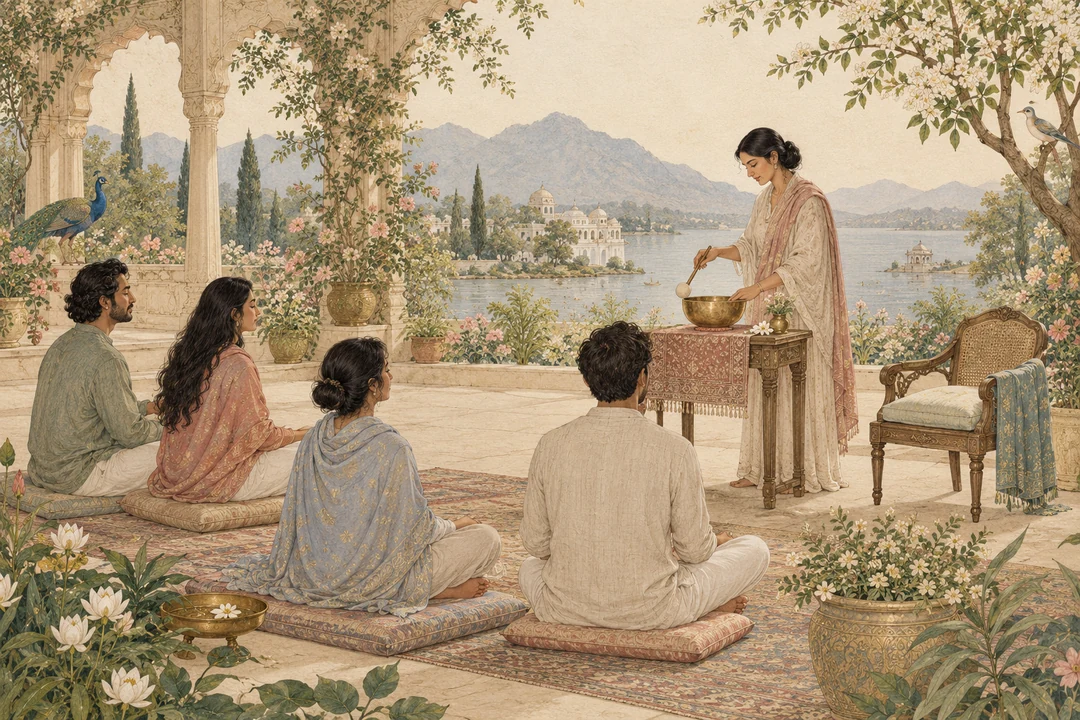 20 MINUTES / FACILITATOR-LED
Possible takeaways, at your own pace. You do not have to feel differently for a practice to count.
These are opportunities to learn and practise, not promised outcomes or treatment benefits. Keep, adapt or stop according to your experience.
Arrange the stated support before taking part. This overview helps you understand the experience; it is not a facilitator qualification.
Quiet room with easy exit
Optional soft sound instrument; chairs
Occasional event
No therapeutic frequency, healing or disease claims; adapt for hearing differences and sensory sensitivity. A fully silent visual pause can replace the complete experience.
Keep breathing natural. Pause or stop if uncomfortable. Do not practise while driving or doing safety-critical work.
Explain that this is a listening experience, ask about access preferences and offer silence or leaving as equal options.
Demonstrate a brief soft sound from a distance. Check comfort before continuing; never place instruments on bodies.
Alternate short sounds with quiet at a level comfortable to participants; stop on request.
End the sound, invite eyes-open orientation and allow people to adjust or leave quietly.
Ask only about comfort and preference, not visions, diagnoses or supposed energy changes.
You can think, write, draw or leave this unanswered. Nothing needs to be shared.
Keep any future listening brief and comfortable.
Occasional event. You can keep, adapt, pause or stop. No catching up and no promised results.
A simple check-in, for you. Your choice stays on this page and is not sent or saved.
Explore listening, with quiet always available.
Explore Sound & Silence