
Eight Minutes for Yourself: Everyday Rituals for Busy Days
Make room for yourself with simple rituals for calm, energy, nourishment, connection and direction, in eight minutes or less.
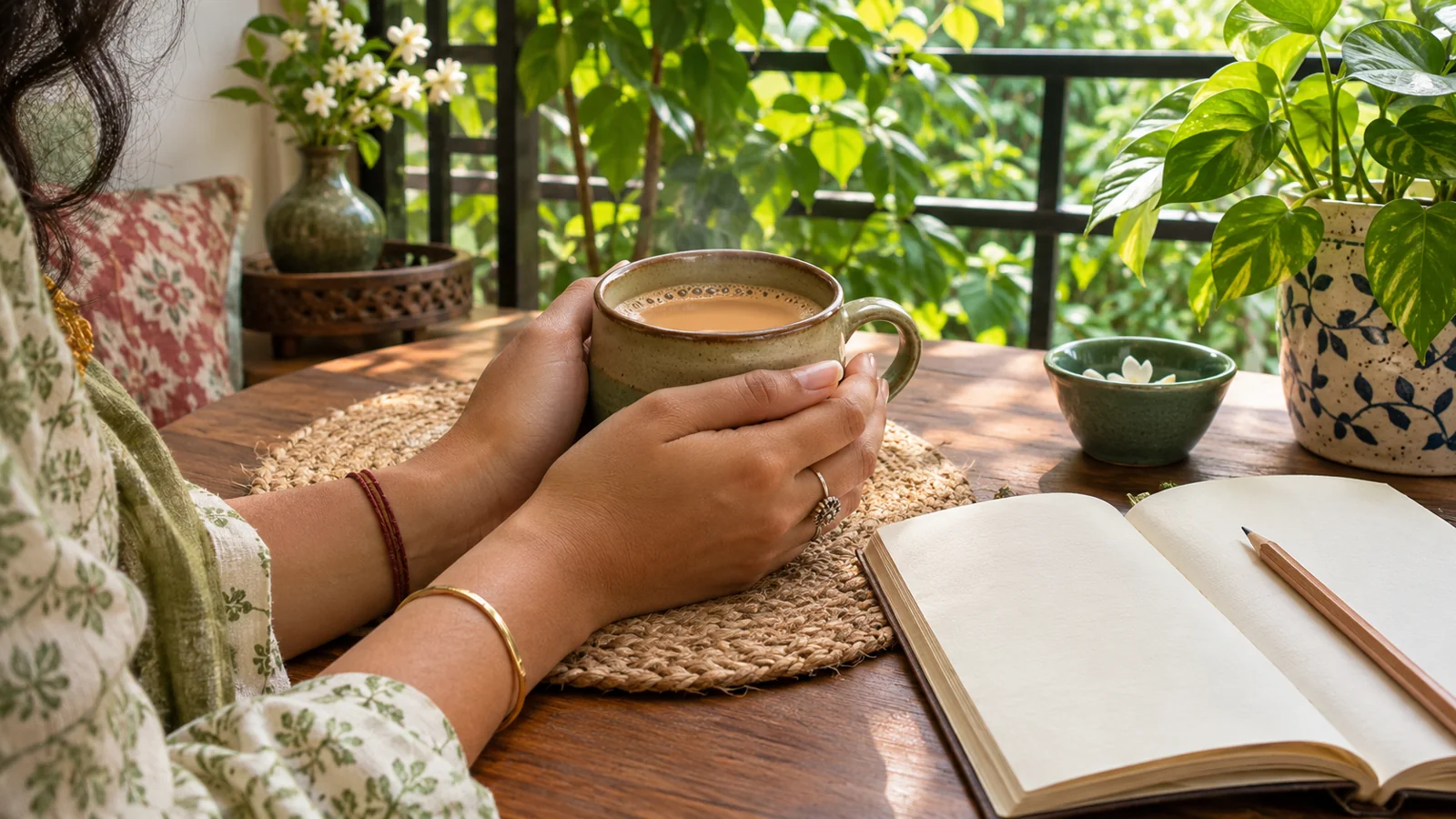
Most of us do not lack the desire to look after ourselves. We lack the time, or at least the feeling of having any. Between work, family and the constant pull of our phones, the idea of a daily wellbeing practice can feel like one more task on an already long list.
That is where small rituals come in. A ritual is not a project. It is a short, repeatable moment that tells you, quietly, that you matter too. At Swthastu, many of our everyday practices take eight minutes or less, because we believe the smallest practice you can keep is better than the grandest one you cannot.
Why eight minutes is enough
We tend to believe that change needs a big commitment: an hour of yoga, a weekend away, a total reset. Yet a short practice, done with real attention, can shift how a whole afternoon feels. It gives your mind a pause, your body a softer pace and your day a gentle turning point.
There is also a practical reason. A practice of two or eight minutes fits into a day that is already full. It does not need special equipment, a quiet house or the perfect mood. Because it is easy to begin, it is easy to repeat, and repeating it is where the benefit builds.
What makes a ritual different from a routine
A routine is something you do. A ritual is something you do with attention. Brushing your teeth is a routine. Making your morning tea slowly, noticing the warmth of the cup and the steam rising, is a ritual.
The activity can be almost anything. What changes it is the quality of your attention and the small intention you bring: for these few minutes, I am here. This is why rituals work even on crowded days. You are not adding another task. You are changing how you meet one you were already going to do.
Five rituals to try this week
These practices come from the five areas we return to often at Swthastu: calm, energy, nourishment, connection and direction. Choose the one that matches how you feel today.
Calm: a moment of mauna. Mauna is the Sanskrit word for silence. Sit for three minutes with no music, no screen and nothing to fix. Let your shoulders drop and your breath settle. If thoughts arrive, let them pass without following them. You are not trying to empty your mind, only to give it somewhere to land.
Energy: a reset between tasks. Before you open the next email or start the next task, pause for three slow breaths, making each exhale longer than the inhale. Then stand, roll your shoulders and look at something far away for a few seconds. It is a tiny gap, but it stops one task from bleeding into the next.
Nourishment: one unhurried meal. Choose one meal or snack today and eat it without a screen. Notice the colours, the smell and the first bite. Eat a little slower than usual. The aim is not to eat differently, only to build a kinder, more attentive relationship with food.
Connection: a listening turn. Ask someone close to you how their day really was, then listen for a full minute without advising or interrupting. At home, this works beautifully at dinner, when each person speaks in turn and everyone else simply listens. Being heard is one of the simplest ways to feel close.
Direction: a quiet question. At the end of the day, take a few minutes with a notebook and ask one question, such as what mattered most today? or what do I want more of tomorrow? Write whatever comes, in a line or in a page. Over a week, patterns appear, and with them a clearer sense of what comes next.
How to make a ritual stick
A ritual survives when it is easy to remember and kind to forget. A few ideas help.
Attach it to something you already do. Pair your ritual with a habit that already exists, such as your first cup of tea, your commute or switching off the laptop.
Keep it smaller than you think you need. If you hope to do five minutes, plan for two. A tiny practice that happens beats a long one that does not.
Choose a place. A particular chair, a corner of the balcony or a spot by the window can remind your mind to settle.
Let a missed day go. There is no streak to protect. Return the next day, without judgement. The practice is meant to support you, not to measure you.
Rituals through the seasons of life
What feels right changes over time. During a demanding week at work, a reset between tasks may be exactly what you need. In a festival season, a gathering or a shared meal may matter more. When a family is going through a transition, a simple listening practice can hold everyone together.
This is why we think of wellbeing as personal. You are allowed to change your practice as your life changes. You are even allowed to set a ritual aside and pick it up again later.
When a ritual is not enough
Small practices are a gentle foundation, but they are not a replacement for support. Some days you may want a guided workshop on a theme such as self-care, boundaries or grief, or a conversation with a coach who can listen. Others you may simply want a quiet space to speak or write at your own pace.
Swthastu offers these as separate steps so you can choose what fits. Wellbeing education and experiences are distinct from clinical care, and if you are struggling, it is always wise to reach out to a qualified professional.
A small invitation for today
You do not need to do everything in this post. Choose one ritual and give it eight minutes, or even two. Notice how you feel afterwards, and let that be your guide.
The verse that sits at the heart of Swthastu says it simply: सर्वे भवन्तु सुखिनः, may all be happy. It begins, as everything does, with one small moment of care. Today, let that moment be yours.